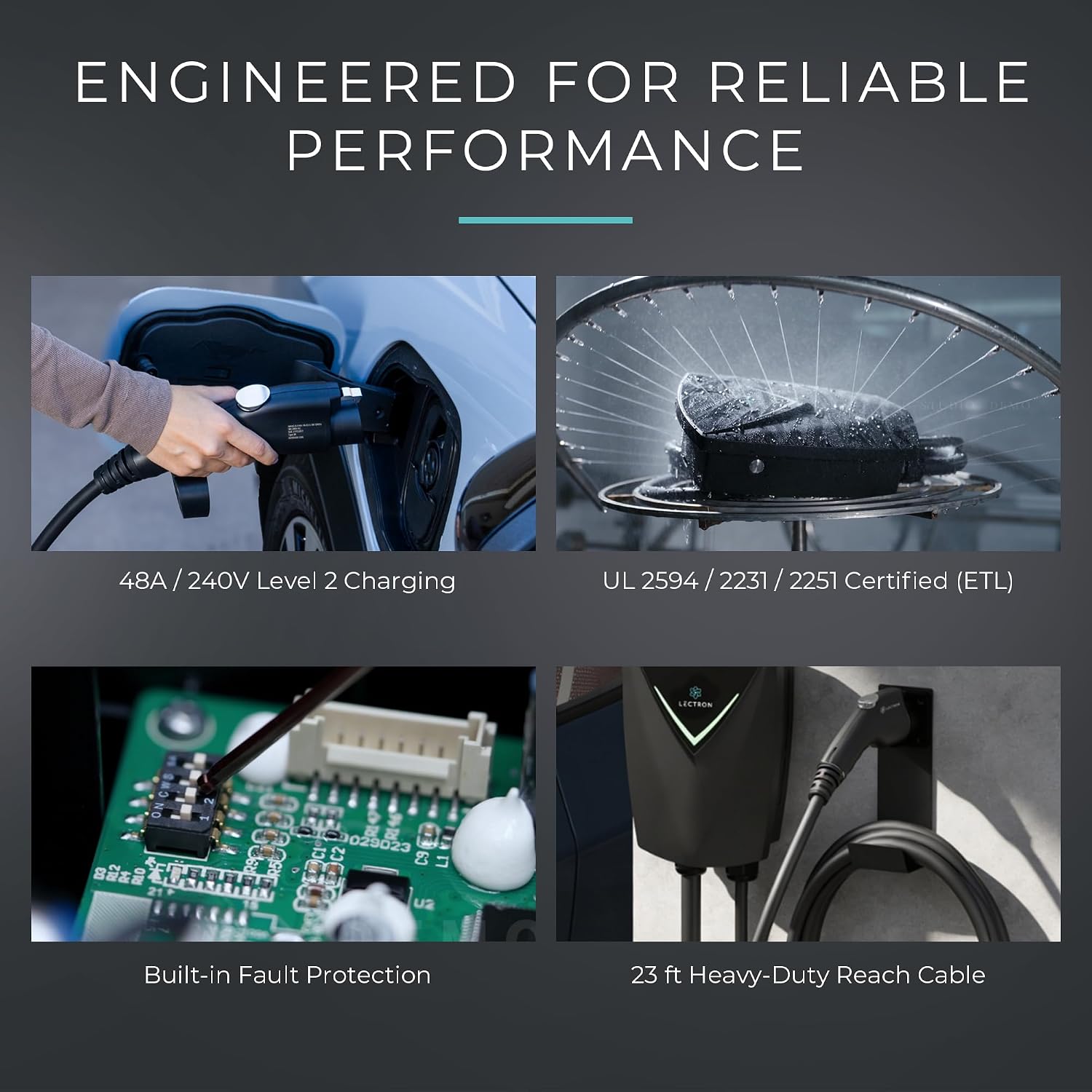
The device feels very robust and well-constructed. It features a strong, heavy-duty design, and the long charging cable enables easy access to vehicles parked in various positions. We have tested it with multiple electric vehicles, including Teslas using an adapter, and it has performed flawlessly with each one. Charging has consistently been dependable, with no interruptions or connectivity issues.
If I were to voice any concerns, they would mostly be minor. The visual design isn’t my top choice, and it is a little pricier compared to some other Level 2 chargers that offer similar functionalities. However, the outstanding build quality and reliability significantly justify the price. When I began exploring home EV chargers, it became clear that if daily charging was the goal, installing the highest-capacity charger that your electrical system can accommodate is wise. This realization prompted me to opt for a hardwired 48A unit rather than a plug-in version.
Given that this is a 48A hardwired model, I had it professionally set up. Once it was operational, I could easily plug in the car upon arriving home, and by morning, it was fully charged. One feature I didn't anticipate valuing so much was the 23-foot cable. It allowed for much greater flexibility regarding where the charger could be installed, and I don't need to park in the exact same spot on each occasion. The provided holster also keeps the connector off the ground and neatly organizes the cable when it’s not in use.
The device itself is sturdy and well-crafted. The charging connector fits tightly, and after numerous uses, there have been no signs of looseness or connectivity problems. Everything has functioned reliably without any unexpected disruptions. This charger is compatible with vehicles that have the J1772 connector, and Tesla drivers can use it with the proper adapter.
It is clearly built for outdoor use, so I have no worries about leaving it installed outside. Overall, it’s one of those improvements that quickly integrates into daily life. Once set up, charging your electric vehicle at home becomes much simpler, and the lengthy cable provides more convenience than I anticipated. Just keep in mind that it requires a hardwired setup, which should be considered when determining the total expense. This unit is fixed at 48A and cannot be modified through internal switches or software. Due to the National Electrical Code (NEC) 80% continuous-load regulation, it needs to be installed on a dedicated 60A breaker with suitably sized heavy-gauge wire, typically 6 AWG or thicker, depending on the installation. If your electrical panel can only accommodate a 50A breaker, this charger cannot be used, as it cannot be adjusted to draw only 40A. There is no companion app, Bluetooth, or Wi-Fi capabilities. You won't be able to monitor energy usage, schedule charging times, or access real-time statistics on your mobile device through the charger. If you want to charge during off-peak utility rates, you will need to depend entirely on your vehicle's built-in charging timer.