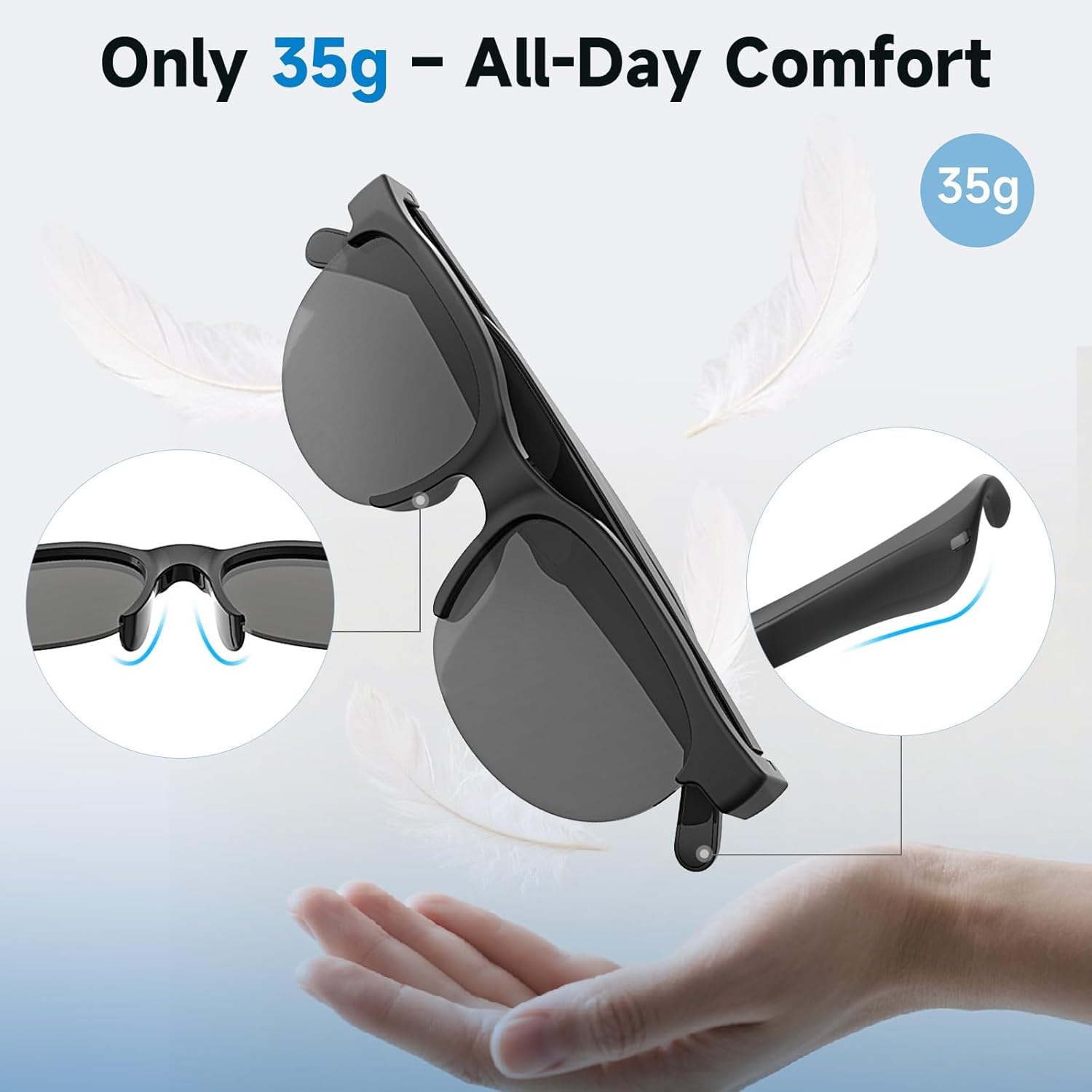
A local izakaya served me ramen, which was the first genuine exam I ever took. In order to activate the real-time translation mode, I touched the temple of the glasses as the waiter approached. I was welcomed in Japanese, and fairly immediately after that, I was able to hear his remarks over the open-ear speakers. His comments were crystal clear, well-paced, and given with a genuine accent. As soon as I spoke in English, the microphone on the glasses caught up my voice quite well, and the waiter's eyes lighted up as he listened to my Japanese recording. An otherwise potentially difficult ordering procedure was transformed into a seamless engagement that garnered me real smiles thanks to that fluid conversation, which did not need me to hold up my phone before the transaction. The photochromic lenses continued to demonstrate their remarkable capabilities throughout the day. While I traveled from a park that was drenched in sunlight to a hallway in a temple that was somewhat shaded, I noted that the hue changed in a matter of seconds. It did not cause me to squint while I was outside, nor did it need me to search for a case when I went inside. Because of the adaptive shading, I was able to keep the glasses on during the whole of my sightseeing trip, completely eliminating the need to switch between translation devices, sunglasses, and prescription readers. Even throughout an eight-hour shooting session, I hardly noticed the presence of the glasses being on my face since the frame was so lightweight that it stayed comfortable for extended periods of time.











Report