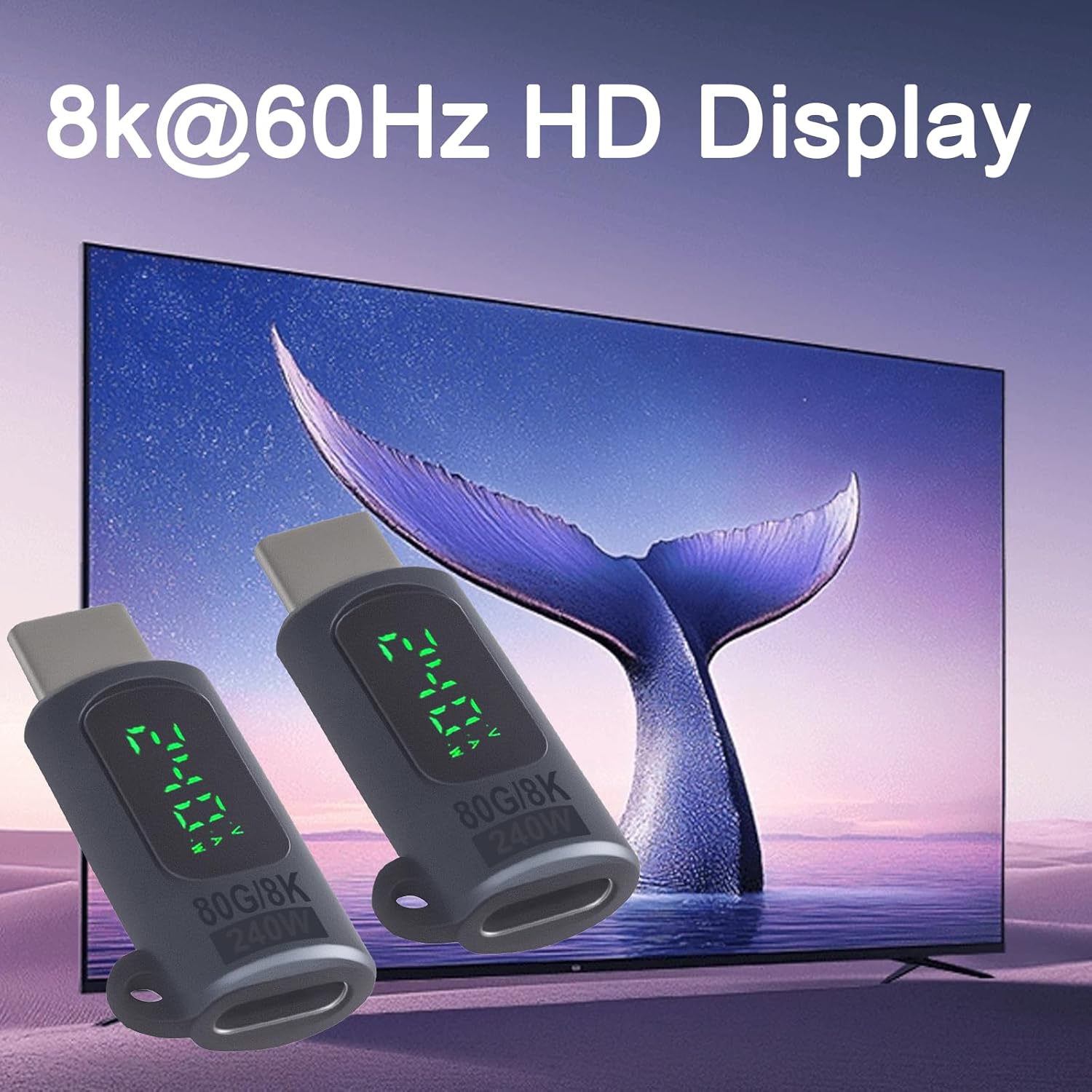
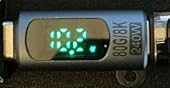
These are decent USB-C/C (F/M) adapters/extenders with a typical aluminum alloy shell and digital LED display/meter that appear to be reasonably well made without visible defect and for the most part work as expected without issues; however, they do become quite HOT after about 3-4 min when running at 140W (see below) . This may or may not be an issue for you depending upon your individual case. They're rated for USB4 v2.0/Gen4 (claimed) and claim to support for 8K@60Hz or 4K@120Hz (4K@120Hz tested) along with a data rate of 80 Gbps (20 Gbps tested) and charging wattage of 240W (140W tested). I should also mention that the claim for 80 Gbps is questionable at best although I don't have any device to be able to test it with at the moment.
My primary use case for these is to provide power and/or data transfer so that's what the majority of tests will be focused on. However, I have to say that one of the primary reasons for the order is in fact the digital LED display/power meter and indeed they to work as expected with respect to that particular feature although their accuracy does leave a bit more to be desired.
≡ Physical build
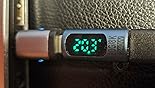
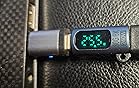
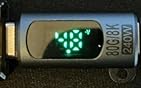
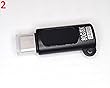
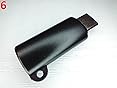
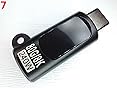
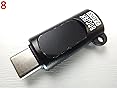
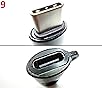
The physical build quality seems decent with a typical aluminum alloy shell along with a lanyard loop which I do appreciate. The vast majority of these USB-C/C adapters usually have an aluminum alloy shell (most common, such as these), zinc alloy shell, or some other type of plastic and they often do NOT have a digital display like these. The display shows the voltage, current, and power consumed by the device and it automatically cycles all 3 values which I do appreciate and indeed that's one of the reasons for the order, as aforementioned.
≡ Video/data transfer
These are USB4 v2.0/Gen 4 (or at least USB4 Gen 3×2, which is rated at 40 Gbps) rated adapters compatible with TB 4/5 to carry data at high speed (80 Gbps) and in particular, video signals. I don't have an 8K monitor to test but they do work just fine without issues as claimed with a 4K@120Hz for a 27" MSI monitor. Note that 40 Gbps is NOT (at least not without compressions) technically adequate to support 8K@60Hz standard video since 49.65 Gbps is required. UHBR 10 is capable of 38.69 Gbps so it can fully support 8K@30Hz standard video (24.48 Gbps) or 8K@30Hz HDR video (30.60 Gbps) without issues; however, 8K@60Hz standard video (49.65 Gbps) requires DSC or 4:2:2 chroma subsampling and 8K@60Hz HDR video (62.06 Gbps) requires DSC or 4:2:0 to work.
These adapters should be able to support up to 8K@85Hz for standard videos or 8K@75Hz for HDR10 videos without ANY other technologies if they're indeed capable of 80 Gbps.
With respect to data transfer, they're capable of at least 2077.60 MB/s (16.6208 Gbps) during tests (pic 13) which is reasonably decent although it's about 15-25 MB/s less than some others with similar spec (i.e. its aluminum or zinc alloy alternatives). The tests were performed with 20 Gbps M.2 NVMe enclosures.
≡ Quick charging
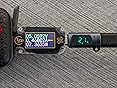
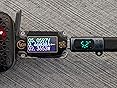
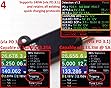
They support quick charging via PD3.1 as well as all other typical quick charging protocols including the most common ones such as QC 2.0/3.0 or even AFC and FCP/SCP. They support and are indeed capable of 140W via PD3 (pic 4); however, they do become quite HOT after a few minutes running at 140W so that's a bit of a concern for me and certainly a bit of a disappointment in that regard.
≡ Temperature @ heavy load/high power
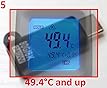
There is significant increase in temperature during high power/load at around 140W after 5min and that's certainly disappointing to see given the circumstance. For context, a few of these adapters that I have come across and tested have their temperature measured at around 50-55°C (and that's quite hot actually, see below) all the way to 75°C (and most of 'em do have metal shell though). Unfortunately, these are amongst those with apparently poor heat dissipating capabilities (or perhaps undesirable heat generating capabilities).
On the other hand, with respect to power efficiency, these appear to be reasonably well-constructed with little power wasted despite the fact it has a significant temperature increase when running at full load of 140W (for around 10 min during tests). Decent construction usually means less power loss which in turn (usually) translates to moderate amount of heat being generated but that's not the case here.
As a side note, while 55°C might not sound much, consider this; the hot water that comes out the tap from most residential boilers is around 50°C-55°C. I've come across hundreds of these USB adapters (straight and 90° angled of various orientations and dimensions and of different connector types etc.) and I've seen ones that were around 75°C that WOULD burn your hand (as they did to me) which is simply unsafe.
My guess is that these will probably overheat if used in an enclosed space at high power (wattage) for prolonged period of time so be warned.
≡ Wasted/lost power (wattage reduction)
Based on my tests, the wattage reduction is moderate at around 2-3W max which isn't too bad but it's certainly NOT great and it's actually slightly high(er) in comparison to ordinary USB-C/C adapters, but it's somewhat the norm and typical for those adapters or cables with built-in power meter such as these. For reference, typical adapters made of aluminum alloy shell usually have 0.7-1.1W reduction at the lower end and around 2-3W at the highest. The less power is lost, the less heat is generated as a result that signifies an overall good/better electrical design and/or manufacturing process.
≡ LED indicator/power meter
One of the selling points for these adapters is the digital LED display/power meter and indeed that's one of the primary reasons for the order. The LED display is reasonably bright and easy to read and I have no issues with it during the tests although its accuracy does leave a bit more to be desired especially at full load (i.e. 140W).
The accuracy varies depending up on the load and the higher the load is, the less accurate it becomes. At the max load, it's off (lower) by about 3-6W which is somewhat significant although it's still less than 5% in the grand scheme of things and most people most likely won't even notice or care about it. However, just note that it shows a few watts LESS than the actual power consumed when it's over 60-65W.
≡ Value
All things considered, these are reasonably decent USB-C/C (F/M) adapters that appear to be well-made, reasonably efficient, and for the most part work as expected without any issue despite the fact that they do run quite HOT after a few minutes when it's at 140W. As such, these probably are NOT the best option if you need to charge something at over 4.5A (regardless of voltage since the current is that drives up the temperature) for prolonged period of time.
They support and retain all known/supported quick charging protocols, which is nice since some others with similar design (rated at 100W/240W) don't necessarily support 'em. The digital LED display/power meter also works well given the circumstance and it's undoubtedly useful and can certainly be helpful in a number of situations (i.e. to take the guesswork outta the equation). They're reasonably priced at $15 for what they provide and their overall build quality, features, usability, versatility, and performance. Your mileage might vary.



















Report