This is my second Dreame robot vacuum. After a disappointing experience with a Roomba, I thought all robot vacuums were a giant waste of money. Then we bought a Dreame L40 Ultra. Affectionately named Spill Murray, that little robot has seen heavy and faithful service since August. It has vacuumed and mopped the house several times a week, making it feel like you have a maid service when you come home to a beautifully clean floor—going as far as leaving stripes in the carpet.
When I had the opportunity to try the next level in Dreame’s lineup, I didn’t hesitate and grabbed this Aqua 10, which has been christened Durt Reynolds. Setup on the Aqua 10 isn’t difficult and is easily completed in ten minutes using the quick-start guide. Basically, you plug in the base, remove the tape and padding from the robot, fill the water and cleaner tanks, and download the Dreame app. The app is easy to use and gets the robot connected quickly. After connecting the robot to your 2.4 GHz Wi-Fi, it will need to map your house, so it’s best to have everything off the floor. After mapping, you can fine-tune the map and the order in which the robot will clean, then press “clean.”
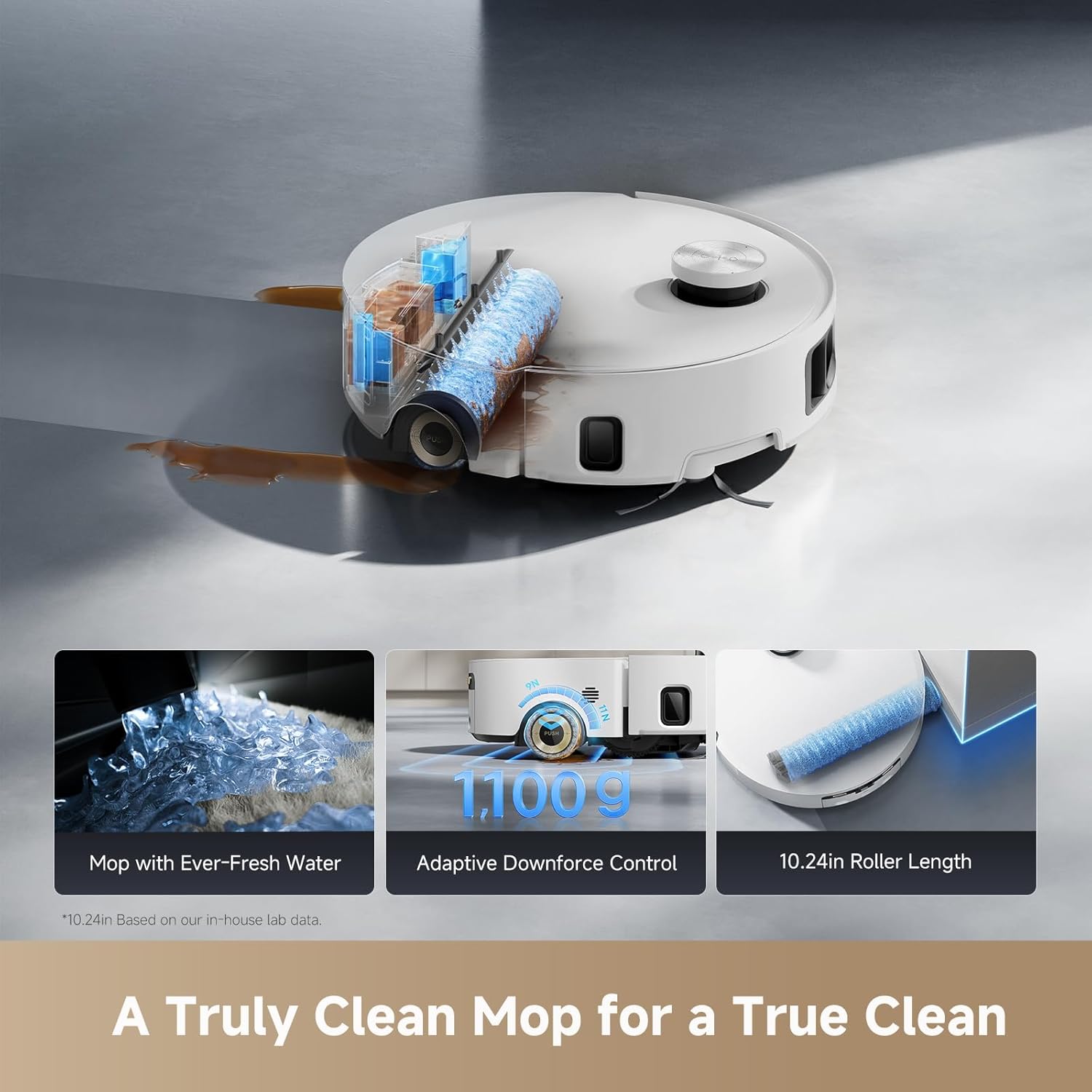
The Aqua 10 has some major differences compared to the L40 that somehow make it even better than the already excellent L40. Both robots have a single side brush that really does a great job around baseboards and cabinet overhangs. The first major difference is the mopping system: the L40 has two spinning mop disks that stay in the base when you aren’t vacuuming and mopping, while the Aqua 10 has a roller mop that is always along for the ride. As far as which method is better, I would have to go with the roller. They both do an excellent job, but the roller seems more consistent at removing stuck-on messes, and its self-cleaning is superior.
The second difference is that the Aqua 10 has two agitators that feed the vacuum like a mouth, while the L40 makes do with a single agitator. Again, both robots do an excellent job, but the Aqua 10 doesn’t leave anything behind. Cleaning speed is the same, but the Aqua 10 has to return to the base more often to dump the vacuum chamber and mop water. I always run these robots at night or while I’m at work, so I can’t really say how long it takes to clean the whole house. Battery life is great, so you don’t lose any time to charging.
With both robots, it took a couple of uses to really get up to speed, so don’t be alarmed by any weird stoppages the unit may have during the first couple of runs. After the break-in period, breakdowns are rare, and the only stoppages you’ll encounter will be because you left a cord on the floor and it got sucked up.
Both robots are an excellent value when you realize all the time you now have because you don’t have to vacuum or mop anything other than spills. When compared with the L40 Ultra, the Aqua 10 is noticeably better at cleaning, making it worth the extra money.







Report